Mulching instead of hauling
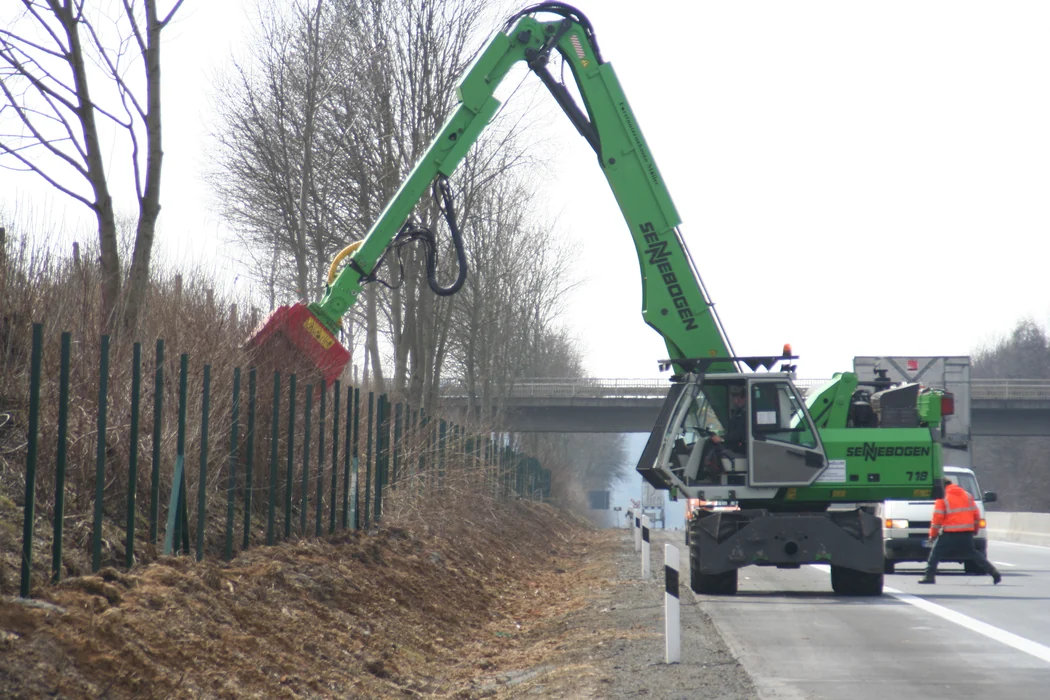
Mulching clears standing brush and small timber and leaves it on the ground as a mulch layer, instead of a pile that has to be burned or trucked off the property. On a lot of jobs that is both the cheaper answer and the tidier one.
There is no windrow to deal with, no burn permit to wait on, no disposal cost, and the job is finished the day the machine leaves rather than weeks later when someone comes back for the debris.
Where mulching makes sense
- Overgrown lots and reclaimed pasture
- Fence lines, property lines and survey lines
- Trail and driveway corridors
- Wildfire fuel reduction around buildings
- Brush regrowth on previously cleared ground
- Clearing under power and utility lines
- Setback areas where soil disturbance is restricted
- Seasonal property maintenance
- Selective thinning around standing timber
What it leaves behind
The mulch layer holds the ground together while the roots are still in it, which means far less erosion than open clearing on a slope. It suppresses regrowth for a while, and it breaks down into the soil over a few seasons.
For pasture reclaim, trail corridors and general property maintenance, that is exactly what you want: open ground you can walk and see across, with the soil left intact.
Mulching or full clearing
Mulching is not always the right call, and we would rather say so than take the easier job. If you are building on the ground, the stumps and root mass still have to come out, and mulching only handles what is above the surface.
The rule of thumb: mulching for maintaining, opening up and reducing fuel, full land clearing for anything that is going to be built on or dug into. Tell us what the ground is for and we will point you at the right one.