All services Excavation Demolition Sewer systems Land clearing Foundations Property development Mulching Landscaping
How we work Service area Contact 250 643 2805
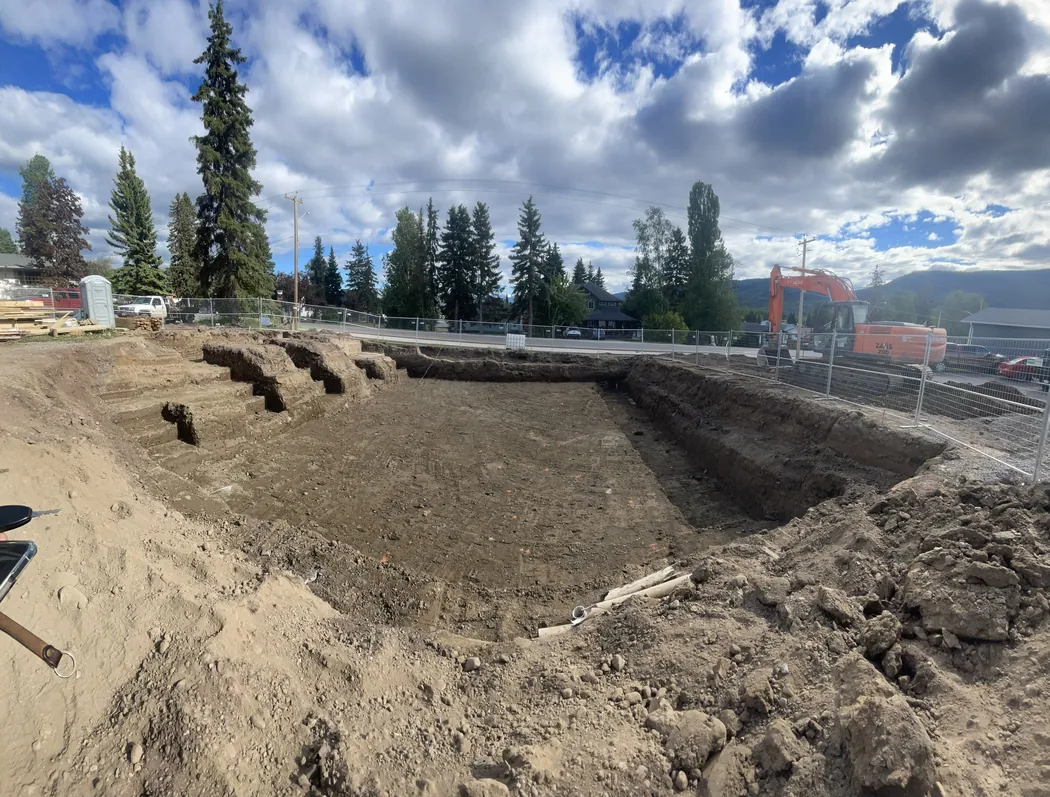
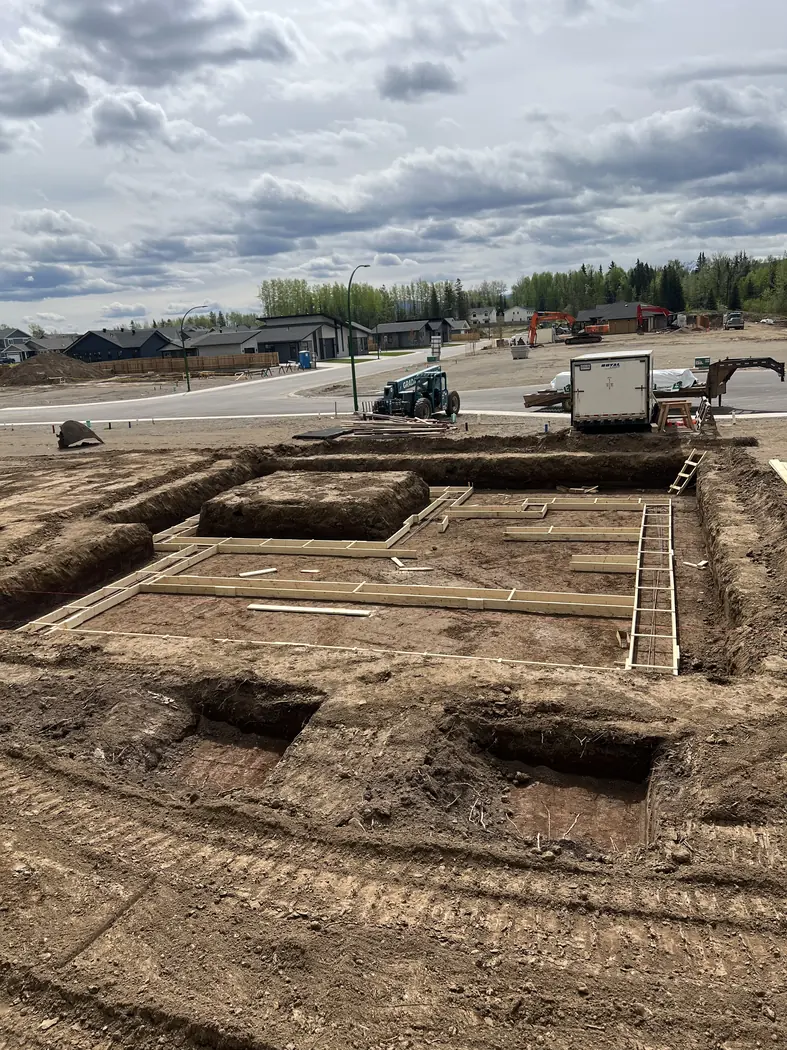
Formed and staked footings dug square and level on a new house pad

Foundations

House pads and footings dug to spec, square, level and on grade.

Yard

5423 Morris Road, Telkwa, BC V0J 2X3

Hours

Seven days, 7:00am to 6:00pm

Request a quote

Prefer to talk it through? Call 250 643 2805, seven days, 7:00am to 6:00pm.

We'll get back to you shortly.

Foundation excavation for builders and homeowners

A foundation dig is measured work, not rough work. The pad has to be square, level and on the right elevation, the footing trenches have to match the drawing, and the bearing surface has to be undisturbed ground or properly compacted fill.

Get that wrong and everyone downstream pays for it. Forms that will not line up, concrete volumes that run over, and in the worst case a building that settles unevenly a few years in. We dig foundations for builders across Telkwa, Smithers and Houston, and for homeowners running their own build.

What the work covers

  • House pad stripping and building
  • Footing trenches dug to spec
  • Basement and crawlspace excavation
  • Garage, shop and addition pads
  • Structural fill supply, placement and compaction
  • Perimeter drain trench and drain rock
  • Frost wall and grade beam excavation
  • Backfill once the forms come off
  • Final grade sloped away from the building

Frost depth and bearing

Footings in this part of the province have to sit below frost, on ground that will carry the load without moving. That means stripping off topsoil and organics entirely, because organic material rots and compresses, and building back up with engineered fill where the native ground will not do the job on its own.

Where a soils report or an engineer's spec governs the job, we build to it and we tell you what we found if the ground does not match what the report expected. That conversation happens while the hole is open, which is the only time it is cheap.

Working to the builder's schedule

Foundation work sits on the critical path. The forming crew, the concrete truck and the framer are all lined up behind the excavation, and a dig that runs two days late moves every one of them.

We schedule foundation digs knowing that, and we come back for backfill and final grade when the build is ready rather than making you chase us for the second half of the job.

Where we work

Foundation digs around the valley

A footing has to sit below frost on ground that will carry the load without moving. What that takes is different on a Telkwa river bench than on a Smithers hillside.

Telkwa

River bench gravel gives good bearing, and it will not hold a vertical cut. A basement here gets battered back or shored rather than dug square to the line, which means a bigger hole and more spoil than the print suggests, and that is better known before the quote than after. The short run from the yard suits a builder working to a tight forming schedule, because we can be on site for the morning the forms are ready rather than the afternoon.

Smithers

Most new residential building in the valley happens here, and the ground asks for more work. Bench clays and till need the organics stripped out completely and often engineered fill brought back and compacted in lifts, and a soils report governs more jobs on these lots than anywhere else in the valley. Snow load and meltwater volume off the hill also make the perimeter drain and the quality of the backfill the two things that decide whether that basement is dry in five years.

Houston

Flat lots, easy access, and the coldest end of the valley, which means frost depth governs the footing elevation harder here than anywhere else we work. The upside is room. Spoil can usually stay on site instead of being trucked, and on a house pad that is a meaningful share of the cost that simply does not get spent.

Also working Witset, Quick, Hazelton and Round Lake, and the rest of the valley in between. If your property is somewhere not on this list, call and ask, the answer is usually yes.

Common questions

Foundation questions

How deep do footings have to go?

Below frost, on ground that will carry the load without moving. That is the rule the rest of the dig works back from, and in this part of the province it puts footings deeper than a plan drawn for the south coast expects.

Do you work from the engineer's drawings?

Yes. Where a soils report or an engineer's spec governs the job we build to it, and we tell you what we actually found if the ground does not match what the report expected. That conversation is cheap while the hole is open and expensive once it is closed.

Why does all the topsoil have to come off?

Organic material rots and compresses, so anything structural bearing on it settles unevenly. Organics get stripped out entirely, and where the native ground underneath will not carry the load on its own we build back up with engineered fill placed and compacted in lifts.

Can you work to a builder's schedule?

That is most of what foundation work is. The forming crew, the concrete truck and the framer are all lined up behind the dig, so we schedule knowing a day lost moves every one of them, and we come back for backfill and final grade when the build is ready instead of making you chase us.

Do you install the perimeter drain?

Yes, trench and drain rock as part of the same job, then backfill and a final grade sloped away from the building. With the snowmelt volume this valley gets, that is not a detail to leave to somebody else.